A nation's progress is not measured solely by GDP growth or industrial output. It is equally reflected in the way its cities evolve, how people live, and how efficiently urban spaces are planned. In Bangladesh, the real estate sector is entering a transformative phase where rapid urbanization, infrastructure development, technological innovation, and changing consumer expectations are redefining the future of housing.
Not long ago, the industry revolved around a simple formula: build apartments and sell them. By 2030, however, the definition of real estate will extend far beyond construction. The success of a project will depend not only on its location or size but also on connectivity, sustainability, digital integration, community living, and overall quality of life.
The question is no longer whether Bangladesh's real estate sector will grow. The real question is how it will evolve over the next decade.
Urbanization: The Engine Behind Future Growth
Bangladesh continues to urbanize at an unprecedented pace. Every year, thousands of people migrate to cities in search of better employment, education, healthcare, and improved living standards. This demographic shift is expected to continue well into the next decade.
However, future growth will not be concentrated in Dhaka alone. Emerging urban centers such as Gazipur, Narayanganj, Purbachal, Jolshiri Abashon, Savar, Chattogram, Khulna, Rajshahi, and Sylhet are gradually becoming attractive residential and commercial destinations.
By 2030, Bangladesh's housing market is likely to become increasingly decentralized, with multiple cities driving demand instead of relying on a single metropolitan hub.
Connectivity Will Matter More Than Location
For decades, the real estate industry was guided by one famous principle:
"Location is everything."
That principle is changing.
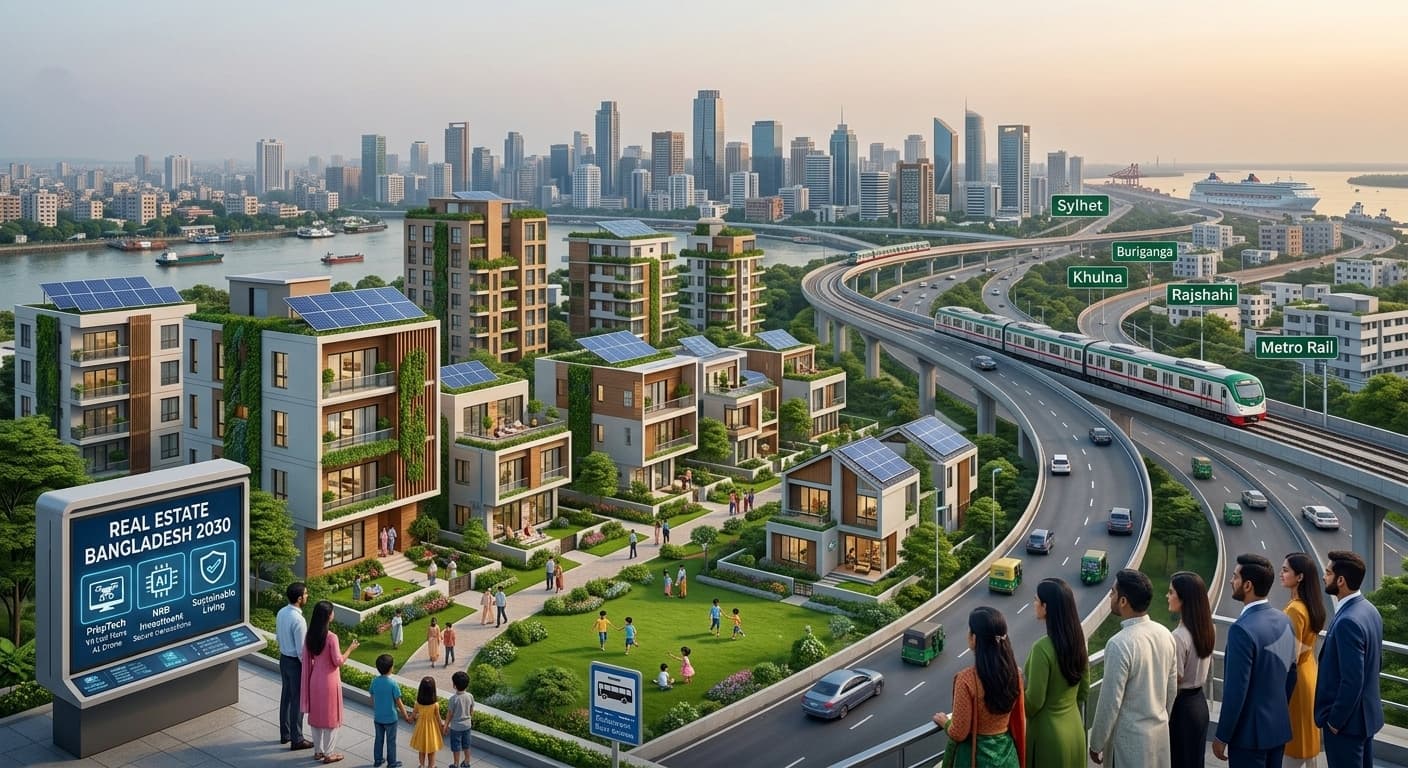
Today, accessibility and connectivity are becoming just as valuable as location itself. Metro Rail, the Elevated Expressway, the Padma Bridge, and expanding highway networks have dramatically reduced travel time and reshaped the value of many neighborhoods.
Properties that are well connected to public transportation, business districts, educational institutions, and healthcare facilities are expected to command stronger demand and greater long-term appreciation.
In the coming years, connectivity may become the defining factor behind property value.
Buyers Are Looking for a Lifestyle, Not Just an Apartment
Modern homebuyers are no longer satisfied with simply purchasing a three-bedroom apartment.
They are investing in a lifestyle.
Questions about green spaces, children's play areas, security systems, uninterrupted utilities, community facilities, fitness centers, and smart home features are becoming increasingly important.
Developers who focus on creating complete living environments rather than just residential buildings will likely enjoy a significant competitive advantage.
Technology Will Redefine the Industry
Technology is rapidly reshaping the global property market through what is commonly known as PropTech (Property Technology).
Bangladesh is beginning to witness this transformation as well.
Virtual property tours, AI-powered property recommendations, drone photography, digital documentation, online booking systems, and smart home technologies are gradually changing how people buy, sell, and manage real estate.
By 2030, digital transparency and customer experience may become just as important as construction quality.
The Untapped Potential of the Bangladeshi Diaspora
Millions of Bangladeshis living abroad aspire to own property in their home country.
Yet many hesitate due to concerns over legal procedures, project credibility, and the lack of transparent investment channels.
Creating secure digital platforms that allow Non-Resident Bangladeshis (NRBs) to verify projects, complete transactions, and manage investments remotely could unlock a significant new source of capital for the housing sector.
Diaspora investment has the potential to become one of the strongest drivers of Bangladesh's future real estate market.
The Middle Class Will Shape the Next Wave of Demand
Bangladesh's expanding middle-income population is expected to play a pivotal role in the future housing market.
Affordable financing, long-term mortgage facilities, and well-planned residential developments will become increasingly important.
While luxury projects will continue to have their place, the real opportunity lies in delivering quality housing that is accessible to the country's growing middle class.
Developers who understand this shift will be better positioned for sustainable growth.
Sustainability Is No Longer Optional
Climate change has fundamentally changed how cities must be designed.
Future residential developments will increasingly incorporate energy-efficient buildings, solar power systems, rainwater harvesting, waste management solutions, green open spaces, and environmentally responsible construction practices.
Sustainability is gradually becoming a necessity rather than a premium feature.
Projects that embrace environmentally conscious design are likely to retain stronger long-term value and attract more informed buyers.
Challenges That Cannot Be Ignored
Despite its enormous potential, Bangladesh's real estate sector continues to face several structural challenges.
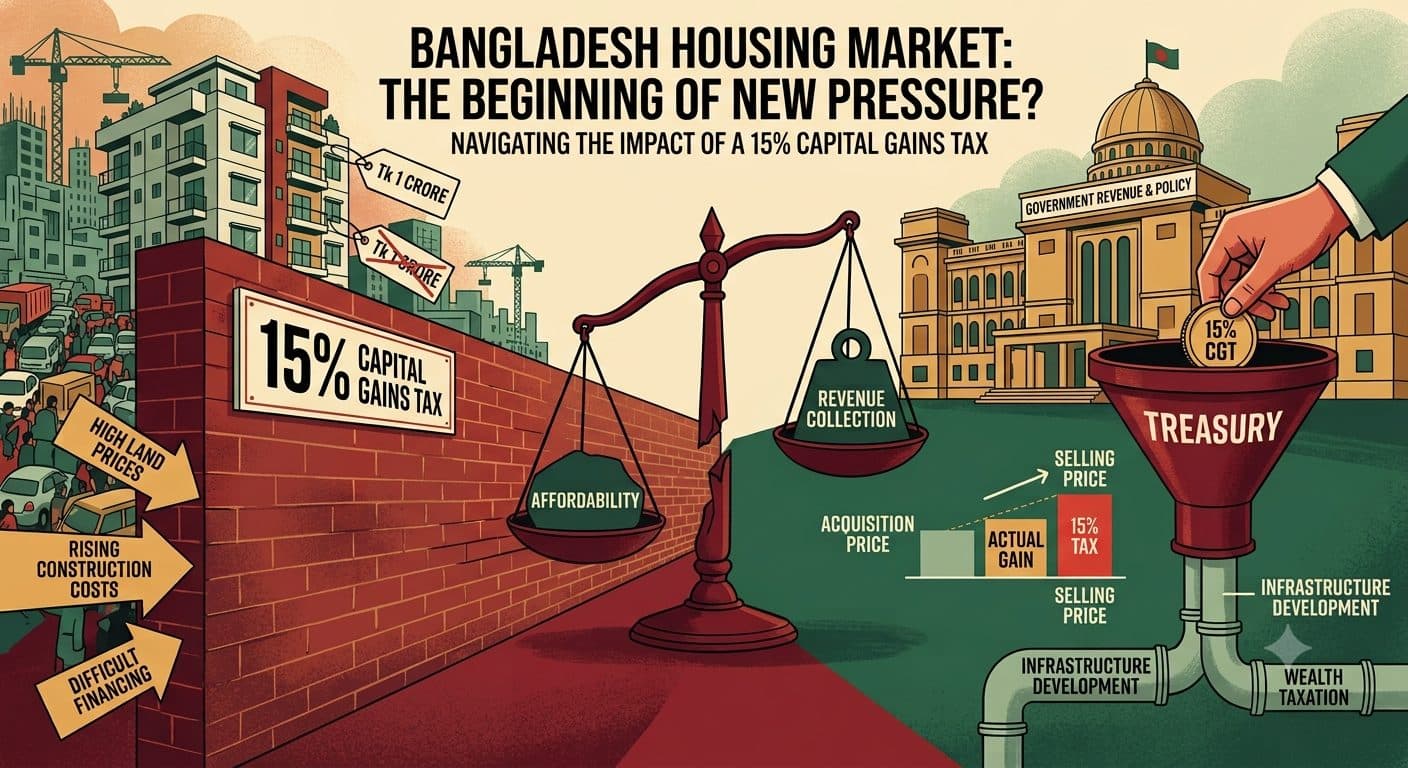
High property registration costs, limited access to affordable housing finance, complex land ownership verification, rising construction costs, and concerns regarding market transparency continue to affect buyer confidence.
At the same time, unplanned urban expansion could place increasing pressure on transportation networks, utilities, and environmental sustainability.
Addressing these issues will be essential if the industry is to realize its full potential.
What Could Bangladesh's Housing Market Look Like in 2030?
If current development trends continue, the country's real estate sector could experience several significant transformations over the coming years:
- Wider adoption of smart and technology-driven housing.
- Expansion of planned satellite cities and integrated townships.
- Greater emphasis on transit-oriented development.
- Increased participation from Non-Resident Bangladeshi investors.
- Stronger demand for sustainable and environmentally responsible buildings.
- Widespread use of digital property transactions and online marketplaces.
These trends suggest that Bangladesh's housing sector is moving toward a more connected, transparent, and technology-enabled future.
Looking Ahead
The future of real estate extends far beyond the construction of buildings. It is deeply connected to urban planning, economic development, environmental sustainability, technological innovation, and the quality of everyday life.
Bangladesh now has a unique opportunity to transform its housing sector through better policies, affordable financing, digital innovation, and smarter city planning.
If these foundations are strengthened, the country's real estate industry could emerge as one of the most influential contributors to national economic growth by 2030.
Ultimately, the question is not simply how many buildings Bangladesh will construct.