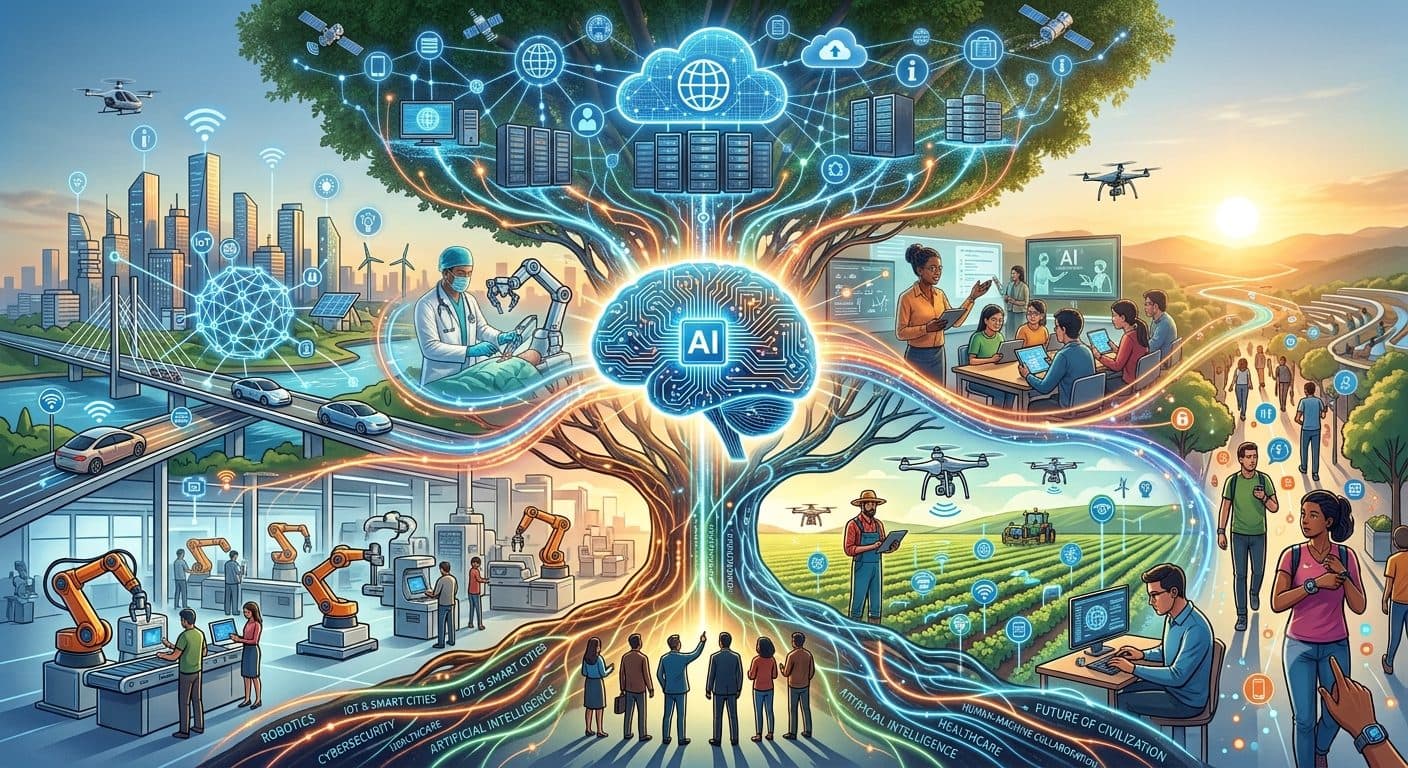
Technology is no longer just a tool that makes human tasks easier; it has become one of the most powerful forces shaping the future of civilization. A few decades ago, computers were mainly used for calculations, the internet was only a medium of communication, and mobile phones were simple devices for making calls. Today, technology has transformed the way we live, work, learn, communicate, and even think.
We are currently experiencing a technological revolution where advanced innovations such as Artificial Intelligence (AI), robotics, cloud computing, the Internet of Things (IoT), blockchain, and quantum computing are redefining the future of humanity.
Artificial Intelligence: The Biggest Technological Transformation
One of the most significant developments in modern technology is Artificial Intelligence. In the past, computers could only perform tasks based on human instructions. However, AI has changed this concept by enabling machines to analyze information, recognize patterns, make decisions, and understand human language.
Today, AI is being used in healthcare to detect diseases, in businesses to understand customer behavior, in agriculture to improve productivity, and in education to create personalized learning experiences.
Generative AI has introduced a new era where machines can create text, images, videos, and even software code. Writers, designers, developers, and professionals from different fields are now using AI as a powerful assistant to improve efficiency and productivity.
However, the rapid growth of AI also brings challenges. Issues such as job transformation, data privacy, misinformation, and ethical use of artificial intelligence have become major global discussions.
Moving Toward a Smarter World
Another major technological advancement is the growth of smart devices. Today, everything from refrigerators and televisions to watches and vehicles is becoming connected through the internet.
The Internet of Things (IoT) allows different devices to communicate with each other and perform tasks according to user needs.
The cities of the future will become smarter through technology. Traffic management, energy distribution, security systems, and environmental monitoring will increasingly depend on advanced digital solutions.
The concept of smart cities is not only important for developed nations but also for developing countries. Proper planning and technology adoption can improve urban life and create more sustainable communities.
The New Relationship Between Humans and Robots
In the past, robots were mainly considered machines used in factories. However, robotics technology has evolved significantly over the years.
Modern robots can now interact with humans, perform complex tasks, and work in dangerous environments where human involvement may be risky.
In healthcare, robotic systems are helping doctors perform highly precise surgeries. In space exploration, robots are collecting valuable information from distant environments. In industries, robots are increasing productivity and improving manufacturing processes.
In the future, collaboration between humans and robots will become stronger. However, maintaining human values and ensuring responsible use of robotics will remain essential.
Cloud Computing: A Revolution in Data Storage
Cloud computing has completely changed the way we store and manage information. In the past, people depended on physical storage devices such as hard drives. Today, data can be stored and accessed from anywhere through cloud technology.
Individuals, startups, and large organizations are using cloud platforms to access powerful computing resources at lower costs.
Cloud technology plays a crucial role in software development, data analysis, online services, and digital businesses. It has made technology more accessible and flexible for users around the world.
Cybersecurity: The Biggest Challenge of the Digital Age
As technology continues to grow, cybersecurity threats are also increasing. Data theft, online fraud, hacking, and privacy breaches have become major concerns worldwide.
Not only large organizations but also individual users need to become more aware of digital security.
Using strong passwords, enabling two-factor authentication, keeping software updated, and practicing safe internet habits can help reduce cyber risks.
As technology becomes more advanced, cybersecurity will become even more important in protecting digital lives and businesses.
Technology Transforming Healthcare
Technology has brought revolutionary changes to the healthcare industry. Advanced AI systems can help doctors detect diseases faster and more accurately.
Telemedicine has made healthcare services accessible to people in remote areas, allowing patients to consult specialists without traveling long distances. Wearable devices are helping people monitor their health in real time.
In the future, personalized medicine based on genetic analysis may provide treatments designed specifically for individual patients. Healthcare will become more accurate, efficient, and patient-focused.
The Future of Technology: Where Is the World Heading?
The future of technology will be faster, smarter, and more connected. Autonomous vehicles, advanced AI systems, virtual reality, augmented reality, and quantum computing are expected to reshape the world in the coming years.
However, the ultimate goal of technology should be improving human life, making society safer, and creating better opportunities for everyone.
Technology itself is neither good nor bad; its impact depends on how humans choose to use it. With responsible development, ethical practices, and a focus on human welfare, technology can help create a better future for the entire world.
The Road Ahead
Technology is no longer just a vision of the future; it is a reality shaping our present. Every innovation brings new opportunities and challenges, changing the way we live, work, and connect with the world.
The journey of technological advancement has only begun. As humans and technology continue to evolve together, the future promises a smarter, more connected, and more innovative world.