The Iran war has created a striking economic paradox.
As conflict in the Middle East disrupts energy markets and consumers face rising fuel costs, some of the world’s largest oil companies are benefiting from the surge in crude prices.
The result is more than a story about corporate profits. It is becoming a political issue in the United States, where lawmakers are increasingly questioning whether energy companies should be allowed to retain extraordinary profits generated during a geopolitical crisis.
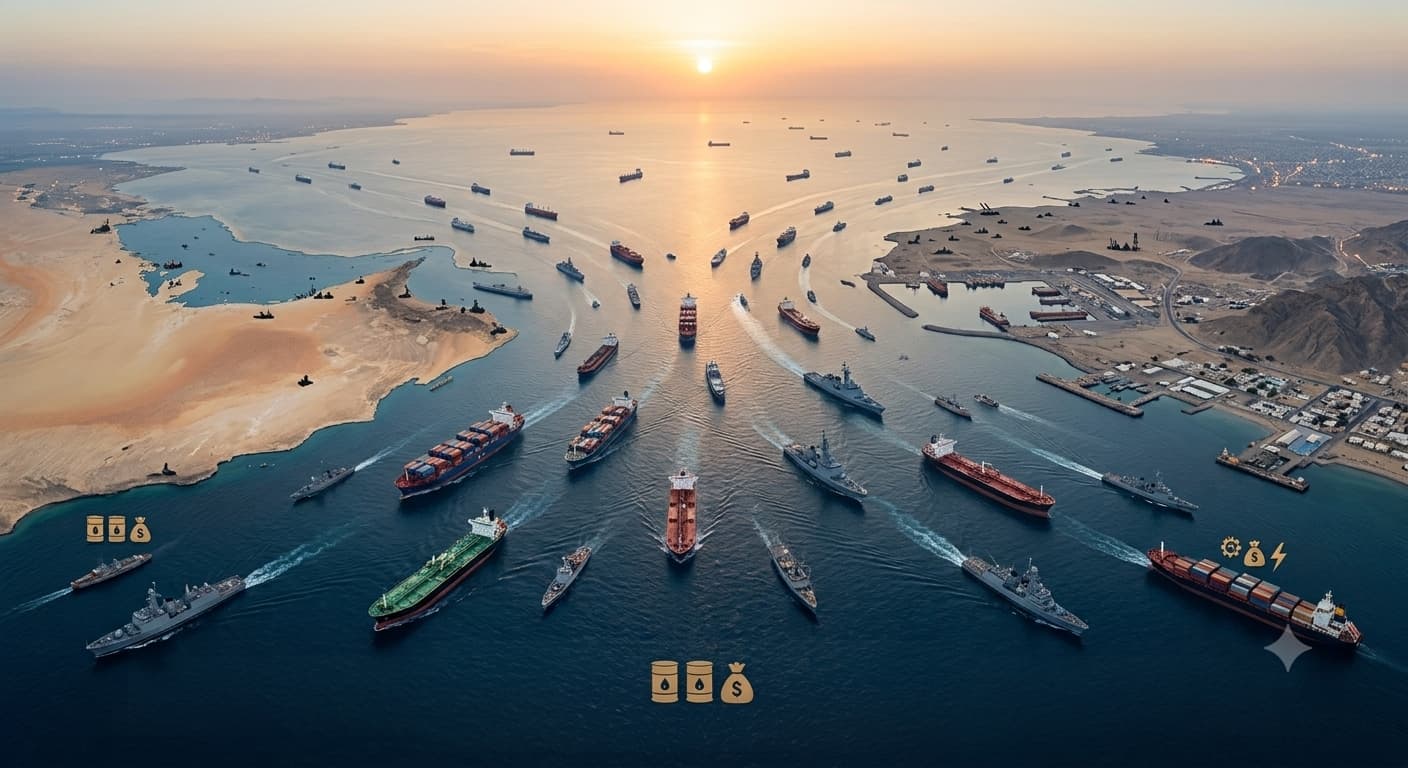
The disruption to oil supplies and uncertainty surrounding the Strait of Hormuz have added significant pressure to global energy markets. The strategic waterway handles roughly one-fifth of global oil supplies, making any disruption there a major concern for the international economy.
As the conflict has continued, oil prices have risen sharply, creating a more favourable environment for major producers and energy companies.
A New Calculation in the Oil Market
The global oil market is driven largely by expectations as well as supply and demand.
When uncertainty emerges around a major oil-producing country or a critical shipping route, traders often price the possibility of future shortages into the market before an actual shortage occurs.
The Iran conflict has followed this pattern.
Concerns over crude supplies from the Middle East pushed international oil prices sharply higher after the conflict began. At one point, global oil prices had risen by more than 50% since the start of the conflict, according to market analysis.
The impact of higher oil prices extends far beyond petrol stations. Transportation, aviation, manufacturing, electricity generation, agriculture and food distribution are all exposed to changes in energy costs.
For oil producers, however, the economics can be very different.
When the market price of crude rises while production costs remain relatively stable, the revenue earned from each barrel increases. If prices remain elevated, a significant portion of that additional revenue can translate into higher profits.
That is where the political controversy begins.
ExxonMobil, Chevron and the Windfall Question
The recent financial performance of major US energy companies has made the contrast particularly visible.
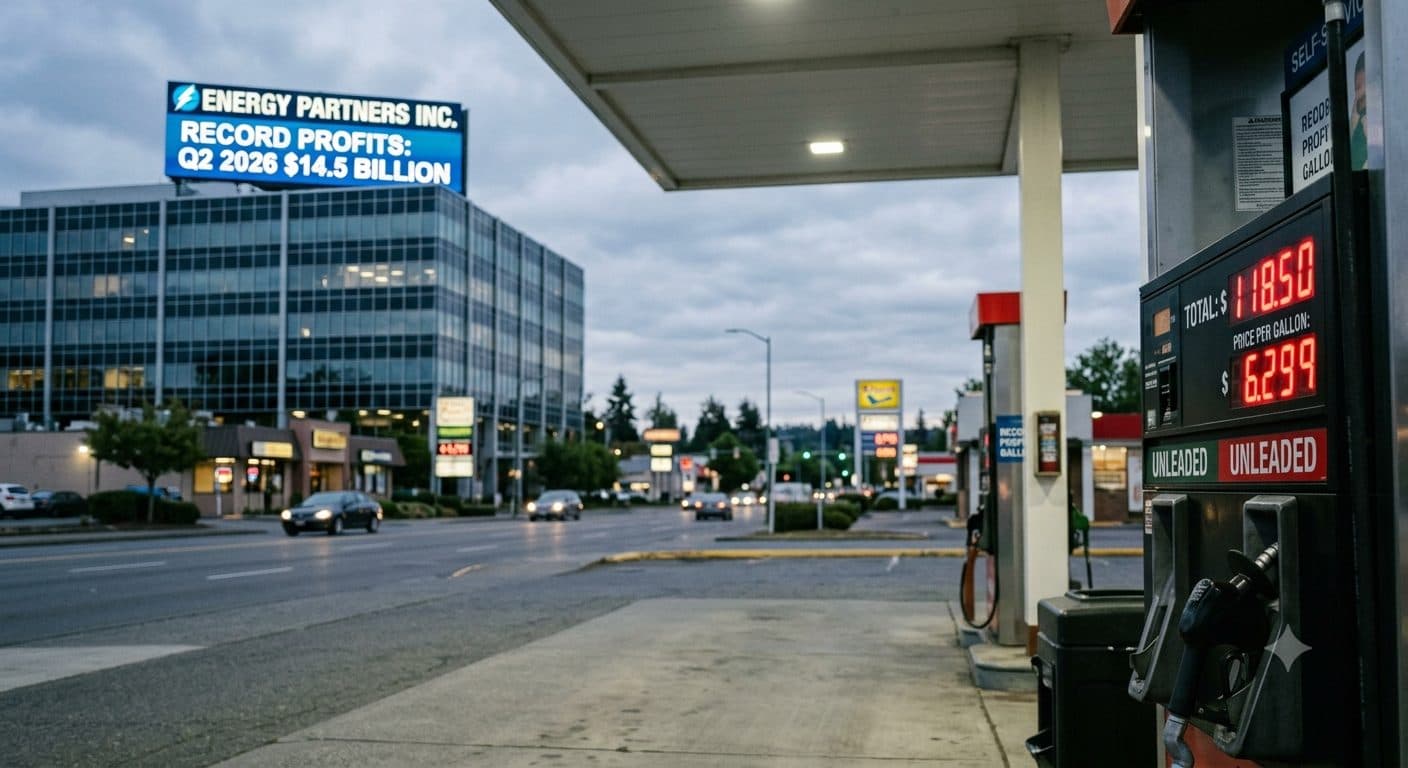
ExxonMobil and Chevron together generated $26.5 billion in profits during the second quarter of 2026, even as American consumers faced higher fuel prices.
The issue goes beyond headline earnings.
Large energy companies are also returning substantial amounts of capital to shareholders through dividends and share buybacks. That means some of the additional revenue generated during a period of elevated energy prices is ultimately flowing back to investors.
For critics, this raises a fundamental question:
If consumers are paying more for fuel because of a war and supply disruption, should oil companies be able to retain extraordinary profits generated by that crisis?
That question is now becoming increasingly difficult for US politicians to ignore.
Why Political Pressure Is Growing
The debate is not purely economic. It is deeply political.
Fuel prices are directly connected to household budgets. When petrol prices rise, transportation becomes more expensive. Higher transportation costs can then feed into the prices of food, consumer goods and other services.
That makes energy prices particularly sensitive for governments.
Several Democratic lawmakers have already increased pressure on major oil companies. Senators Elizabeth Warren and Sheldon Whitehouse sent letters in June to ExxonMobil, Chevron, Shell USA, BP America, ConocoPhillips and Occidental Petroleum, questioning their wartime profits and the impact of higher energy prices on American consumers.
The lawmakers have argued that if crude prices remain near $100 per barrel, US oil producers could generate enormous additional profits during 2026.
That has revived debate over a possible windfall profits tax—a tax designed to capture a portion of unusually high earnings generated by extraordinary market conditions.
Why Should Oil Companies Be Taxed?
The argument behind a windfall tax is relatively straightforward.
A war or geopolitical crisis is not created by an oil company. Yet when that crisis disrupts supply and pushes prices higher, producers can earn substantially more without necessarily increasing production by the same proportion.
Critics argue that some of these extraordinary gains should be redirected through taxation to help consumers cope with higher energy costs.
The oil industry, however, has a very different argument.
Energy companies say strong profits are necessary to support investment in new production, infrastructure and technology. If governments impose excessive taxes on additional earnings, companies could become less willing to invest in future oil and gas production.
That could potentially create another problem: weaker future supply.
The debate therefore goes beyond whether oil companies are making “too much” money. It is also about how governments should balance consumer protection with long-term energy security.
Is War Really a Windfall for Every Oil Company?
There is another important complication.
A rise in oil prices does not automatically translate into higher profits for every energy company.
In the first quarter of 2026, ExxonMobil and Chevron actually reported lower profits, despite the geopolitical turmoil. Production disruptions and other operating challenges meant that higher oil prices did not immediately translate into higher earnings for every producer.
The picture changed as market conditions evolved.
Companies with strong trading operations or exposure to particular parts of the energy market were able to benefit more directly from the price shock.
Shell, for example, benefited from higher oil and gas prices and strong trading performance. Its adjusted earnings reached €6.1 billion in the first quarter of 2026, almost double the previous quarter.
The lesson is important: the economic impact of war on energy companies is not a simple equation.
Some producers face operational disruptions. Others benefit from higher prices. Still others may see higher costs offset some of the gains.
From Consumers’ Pockets to Corporate Balance Sheets
At the heart of the controversy is the movement of money through the energy economy.
When crude prices rise, an American driver pays more to fill a vehicle. Transport companies face higher costs. Those costs can eventually be reflected in the prices of goods and services.
Oil producers, meanwhile, may be able to sell the same volume of crude at a much higher price.
That economic transfer is what lies behind the windfall-profit debate.
Critics argue that extraordinary profits created by a geopolitical crisis should not entirely remain with corporations and shareholders.
Supporters of the industry counter that profits provide companies with the capital needed to invest, increase production and develop new technologies.
Both arguments carry economic weight.
And that is precisely why the issue is becoming so politically difficult.
What Does It Mean for the Global Economy?
The consequences of the Iran war extend far beyond the United States.
Many countries depend heavily on imported oil. When crude prices rise, their import bills increase, foreign-exchange pressures intensify and inflation can accelerate.
Emerging economies are particularly vulnerable.
They can face a double burden: higher energy import costs and higher living expenses for households.
For countries such as Bangladesh, which rely heavily on imported energy, sustained oil-price volatility can become a serious macroeconomic concern.
Why Bangladesh Should Be Watching
For Bangladesh, higher international oil prices can affect the economy through several channels.
A rise in global crude prices can increase the cost of fuel imports. Higher energy costs can then put pressure on transportation, electricity generation, agriculture and industrial production.
The impact can eventually reach consumers through higher transportation costs and increased prices for goods and services.
This means that the political debate taking place in Washington over ExxonMobil, Chevron and other energy companies can have consequences much farther away—including in Dhaka.
For Bangladesh, the challenge will be to manage external energy-price shocks while limiting pressure on foreign-exchange reserves and keeping inflation under control.
The country’s vulnerability also highlights the importance of diversifying energy sources, improving energy efficiency and strengthening long-term energy security.
How Long Can the Oil Shock Last?
The biggest question now is how long elevated oil prices will remain.
Much will depend on the duration of the conflict, the security of the Strait of Hormuz, the ability of Middle Eastern producers to maintain exports and the strength of global demand.
If tensions ease and supply flows return to normal, oil prices could eventually decline.
But if the conflict continues or another major disruption affects a critical supply route, the market could face another wave of volatility.
A prolonged period of high oil prices would create difficult choices not only for consumers and businesses, but also for governments and central banks.
The Bigger Question
The Iran war is therefore more than a geopolitical conflict. It is also an economic test.
On one side are oil companies reporting enormous profits. On the other are consumers facing higher fuel costs.
On one side is the industry’s argument that strong profits support investment and future energy supply. On the other is the growing political demand for greater protection for consumers.
At the centre of the debate is a question that is becoming increasingly difficult for Washington to avoid:
When a war creates extraordinary profits for energy companies, how much should remain with corporations—and how much should return to the public?
The answer could influence more than US energy policy.
It could shape the future of taxation, energy investment, inflation management and energy security across the global economy.
Because in the oil market, the impact of a war rarely stays where the war is fought.
A shock in the Middle East can travel through global energy markets, reach Washington’s political arena and eventually show up in the fuel costs, transport expenses and household budgets of people in Dhaka.