Imagine waking up one morning to discover that global oil prices have skyrocketed overnight. Airline tickets are suddenly more expensive, transportation costs have surged, stock markets are volatile, and economists are warning of an impending energy crisis. Surprisingly, the trigger for this global disruption could be a narrow stretch of water just 33 kilometers (21 miles) wide.
That waterway is the Strait of Hormuz, one of the most strategically important maritime passages on Earth. Though modest in size, it serves as the lifeline of the global energy market. Often described as the "world's most important oil chokepoint," the Strait of Hormuz is where economics, energy security, and international geopolitics converge.
Every day, billions of dollars' worth of oil and natural gas pass through this narrow channel. As a result, even the slightest political tension or military confrontation in the region can send shockwaves across global financial markets, affect fuel prices, and influence diplomatic relations among the world's most powerful nations.
Where Is the Strait of Hormuz?
The Strait of Hormuz connects the Persian Gulf with the Gulf of Oman, which opens into the Arabian Sea and ultimately the Indian Ocean.
Iran borders the strait to the north, while Oman and the United Arab Emirates (UAE) lie to the south.
The strait stretches approximately 167 kilometers (104 miles) in length, with its narrowest point measuring only 33 kilometers (21 miles) across. Despite its relatively small size, it remains one of the busiest and most strategically significant shipping lanes in the world.
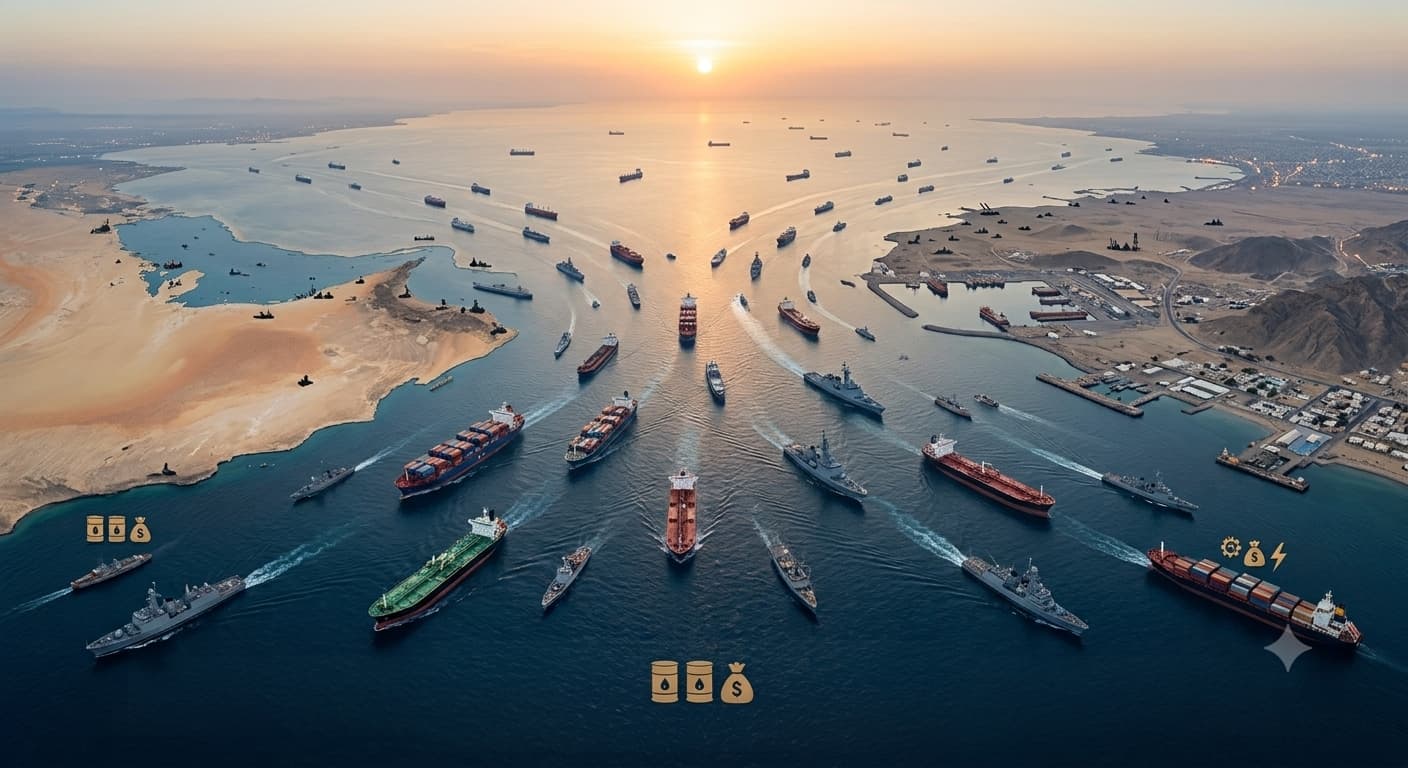
Large oil tankers and cargo vessels follow carefully designated shipping lanes to ensure safe navigation through this narrow maritime corridor.
Why Is It So Important?
The Strait of Hormuz is the primary gateway for energy exports from the Middle East.
A substantial share of the world's seaborne crude oil and a significant portion of liquefied natural gas (LNG) pass through this single waterway.
Major oil-producing nations, including Saudi Arabia, Iraq, Kuwait, Qatar, the United Arab Emirates, and Iran—depend on the strait to export their energy resources to markets in Asia, Europe, and beyond.
From powering factories and generating electricity to fueling aircraft, ships, and vehicles, much of the world's economy relies on the uninterrupted flow of energy through this maritime corridor.
In many ways, the global economy runs through the Strait of Hormuz.
The World's Most Critical Chokepoint
In maritime trade, a chokepoint refers to a narrow passage where the disruption of shipping can significantly affect global commerce.
The Strait of Hormuz perfectly fits this definition.
If shipping were interrupted due to conflict, naval blockades, mines, or major accidents, global energy supplies would tighten almost immediately.
Oil prices could surge within hours, not necessarily because supplies had already stopped, but because markets react quickly to the possibility of future shortages.
This explains why headlines mentioning the Strait of Hormuz often trigger immediate movements in global energy markets.
What Happens If the Strait Is Closed?
Although a complete closure has never occurred in modern history, experts have long studied its potential consequences.
A prolonged disruption could lead to:
- Sharp increases in global crude oil prices.
- Higher transportation and logistics costs.
- Rising electricity generation expenses.
- Increased manufacturing costs.
- Inflation affecting food and consumer goods.
- Economic pressure on energy-importing nations.
Countries heavily dependent on imported energy would face significant financial challenges, while businesses and consumers worldwide would feel the impact through higher prices.
Iran's Strategic Advantage
Iran occupies the entire northern coastline of the Strait of Hormuz, giving it significant strategic influence over one of the world's most important shipping routes.
The Iranian islands of Hormuz, Qeshm, and Larak play vital roles in monitoring and securing the waterway.
Because of this geographic position, Iran has repeatedly warned that it could restrict or close the strait during periods of heightened tensions with Western countries.
Although such threats have never resulted in a full closure, they are often enough to unsettle international energy markets and raise oil prices.
A History of Conflict
The Strait of Hormuz has witnessed numerous geopolitical confrontations over the past several decades.
The Tanker War
During the Iran-Iraq War in the 1980s, both countries targeted oil tankers in what became known as the "Tanker War." Hundreds of commercial vessels were damaged or threatened, disrupting international shipping and raising global concerns about energy security.
Naval Presence
In response to recurring tensions, the United States and its allies have maintained a significant naval presence in the region to ensure freedom of navigation and protect commercial shipping.
Recent Incidents
In recent years, the strait has repeatedly appeared in global headlines due to tanker seizures, drone incidents, missile attacks, and military exercises involving regional and international powers.
Each incident has reinforced the strategic importance of maintaining stability in the region.
Why So Many Warships?
The Strait of Hormuz is not merely a commercial shipping route, it is also a critical military zone.
The United States, the United Kingdom, and several allied nations regularly patrol the area to safeguard international maritime trade.
Meanwhile, Iran considers the strait an essential part of its national security and maintains naval forces, missile systems, drones, and fast attack craft throughout the region.
This concentration of military assets means that even minor misunderstandings can escalate into broader regional crises with global consequences.
Searching for Alternatives
Recognizing the risks associated with relying on a single maritime route, several Gulf nations have invested heavily in alternative export infrastructure.
Saudi Arabia and the United Arab Emirates have expanded pipeline networks and developed ports that bypass the Strait of Hormuz.
At the same time, many countries are investing in renewable energy, electric vehicles, and alternative energy sources to reduce long-term dependence on oil.
However, despite these efforts, no alternative currently matches the capacity and efficiency of the Strait of Hormuz.
For the foreseeable future, it will remain one of the world's most indispensable maritime corridors.
Why It Matters Beyond the Middle East
The importance of the Strait of Hormuz extends far beyond the Gulf region.
When oil prices rise due to instability in the strait, the effects are felt worldwide:
- Transportation becomes more expensive.
- Manufacturing costs increase.
- Inflation accelerates.
- Air travel becomes costlier.
- Consumer goods become more expensive.
- Economic growth slows in many countries.
Whether in Asia, Europe, Africa, or the Americas, billions of people are indirectly affected by what happens in this narrow waterway.
The Future of the Strait
As the global energy transition accelerates, dependence on fossil fuels may gradually decline.
Nevertheless, oil and natural gas are expected to remain central to the global economy for decades to come.
Consequently, the Strait of Hormuz will continue to occupy a pivotal position in international diplomacy, military strategy, and global energy security.
Its significance extends far beyond geography, it represents one of the world's most important strategic crossroads.
Conclusion
At first glance, the Strait of Hormuz appears to be just another narrow stretch of water on the map. In reality, it is one of the most strategically valuable waterways on the planet.
Every day, massive oil tankers carrying the fuel that powers industries, transportation systems, and economies across the globe navigate through this 167 kilometer corridor.
The Strait of Hormuz is far more than a shipping route, it is a geopolitical flashpoint, an economic lifeline, and a cornerstone of global energy security.
As long as the world depends on oil and natural gas, this narrow passage will remain at the center of international attention, shaping global markets, diplomacy, and security for years to come.